You Feel Like You Know Them — But Do You? The Strange Psychology of Celebrity Attachment
Let's be honest for a second. Have you ever felt genuinely sad when a creator you follow announced a hiatus? Maybe you've defended a celebrity online like a close friend was being attacked. Or perhaps you've caught yourself thinking, I wonder what she would think about this — about someone you've never actually met.
If any of that sounds familiar, you're not alone. And you're not weird. You're just a person living in 2024, consuming media in a way that literally rewires how we connect with other humans.
What Even Is a Parasocial Relationship?
The term sounds clinical, but the concept is pretty simple. A parasocial relationship is a one-sided emotional bond — you feel like you know someone, but they don't know you exist. Psychologists Donald Horton and Richard Wohl first wrote about this phenomenon back in 1956, originally in the context of TV personalities. But what they described as a relatively fringe curiosity has become, in the era of Instagram Stories, Twitch streams, and podcast confessionals, an almost universal human experience.
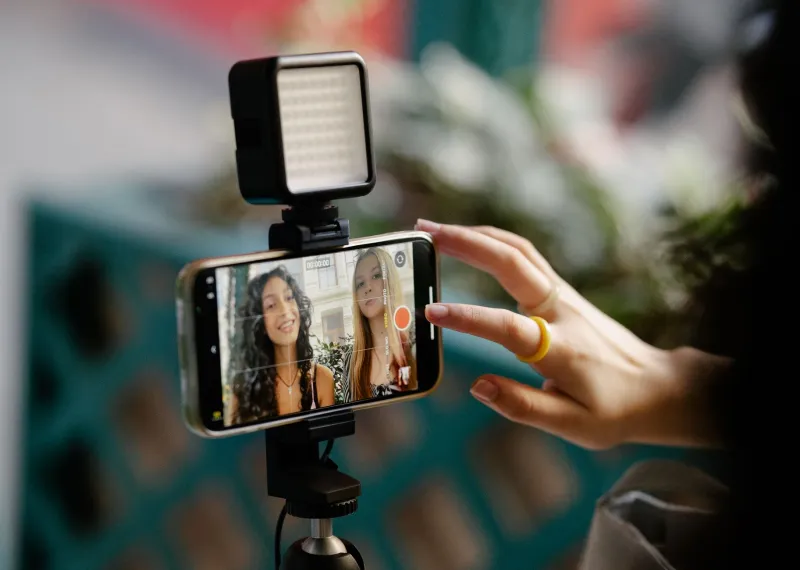
The mechanics have changed dramatically. Old-school celebrities maintained distance by design — a publicist, a velvet rope, a carefully curated press image. Today's influencers and content creators have essentially torn that wall down. They film themselves waking up. They share their therapy breakthroughs. They cry on camera. They answer your comment. That intimacy — even when it's performed or partially manufactured — triggers the same neurological responses as real friendship.
Why Our Brains Can't Tell the Difference
Here's where it gets genuinely fascinating. When you regularly hear someone's voice, see their face, and watch them navigate life's highs and lows, your brain starts cataloging them as a known entity — someone familiar, someone safe. Mirror neurons fire. Oxytocin, the so-called bonding hormone, gets released. Your nervous system doesn't always distinguish between a real friend texting you and a creator you've watched for three years telling you about their breakup.
Social media platforms have engineered this to near-perfection. Algorithmic feeds serve you the same faces repeatedly. Stories and live streams create a sense of real-time presence. Comment sections offer the illusion of two-way dialogue. The result? A relationship that feels reciprocal, even when it structurally isn't.
The Fan Culture Spectrum — From Healthy to Harmful
Not all parasocial investment is created equal, and it's important to make that distinction without being dismissive. On one end of the spectrum, these connections can be genuinely positive. Feeling inspired by a creator's journey, finding community in a fandom, or using a public figure's story as a framework for your own growth — that's real value extracted from a parasocial dynamic.
But the spectrum has a darker end. When a fan's emotional well-being becomes contingent on a celebrity's behavior, when criticism of that celebrity feels like a personal attack, or when the line between admiration and obsession blurs — that's where things get complicated. We've seen it play out publicly: the stans who harass anyone who critiques their fave, the parasocial grief that follows a creator's death, the parasocial rage when an influencer does something human and imperfect.
Psychologists point out that people who struggle with loneliness or social anxiety may be especially vulnerable to deep parasocial attachment, precisely because these one-sided relationships feel lower-stakes than real ones. There's no rejection risk. There's no awkward silence. The creator is always available — until, of course, they're not.
What Creators Know (And Sometimes Exploit)
Most content creators are at least somewhat aware of the dynamic they're operating within. Many lean into it deliberately — and that's not always cynical. Building a loyal audience requires authenticity, and vulnerability is currency in the creator economy. When a YouTuber shares their mental health struggles or a podcaster admits their marriage almost fell apart, they're not necessarily manipulating you. They're doing what humans do: connecting through shared experience.
But the monetization layer complicates things. Merch drops, Patreons, exclusive Discord servers — these structures are built on emotional investment. When a creator you feel close to asks you to support their work financially, the parasocial bond does a lot of the heavy lifting. That's not inherently exploitative, but it's worth being clear-eyed about.
Some creators are starting to have this conversation openly, which is genuinely refreshing. Acknowledging the dynamic, setting explicit boundaries with audiences, and resisting the urge to perform intimacy they don't actually feel — these are signs of a healthier creator-fan ecosystem slowly emerging.
So... Is It Bad?
That's the question everyone wants answered, and the honest answer is: it depends. Parasocial relationships are neither inherently good nor inherently bad. They're a feature of modern media consumption, not a bug. The issue isn't that you feel connected to someone you've never met — it's whether that connection is supplementing your real-world relationships or substituting for them.
If following your favorite creator makes you feel less alone while you're actually working on building a life — cool. If the parasocial bond has become a reason to avoid the messiness of real human connection — that's worth examining.
The blaze-fast pace of content culture means we're all constantly being invited into someone else's world. The trick is remembering you're a guest — not a resident.
What You Can Actually Do With This Information
You don't have to swear off YouTube or unfollow everyone you love. But a little self-awareness goes a long way. Notice when your mood shifts based on what a creator posted. Notice when you feel defensive about someone you've never met. Notice whether your parasocial connections are energizing you or draining you.
And maybe — just maybe — redirect a little of that emotional energy toward someone in your actual life. Tell them you're glad they exist. It hits different when they can actually hear you say it.